In the ever-evolving landscape of fashion, few brands have managed to transcend their original purpose and become a cultural icon quite like Converse. What began as a humble basketball shoe in the early 20th century has since evolved into a symbol of rebellion, creativity, and timeless style. The journey of Converse from the hardwood courts to the glittering runways of Fashion Week is a testament to its enduring appeal and adaptability.
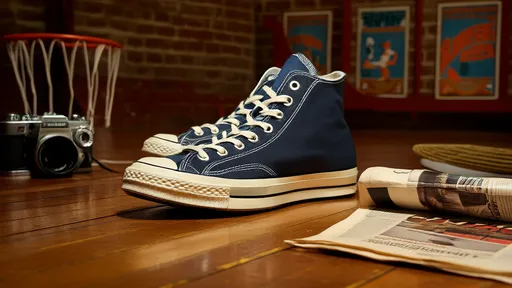
The story of Converse starts in 1908 when Marquis Mills Converse founded the Converse Rubber Shoe Company in Malden, Massachusetts. Initially producing winterized rubber-soled footwear, the company shifted its focus to athletic shoes by 1915. The pivotal moment came in 1917 with the introduction of the Converse All-Star, a shoe designed specifically for basketball players. Little did anyone know that this utilitarian sports shoe would lay the foundation for a cultural revolution.
Basketball in the 1920s was gaining popularity, and Converse found its perfect ambassador in Charles "Chuck" Taylor, a semi-professional player who joined the company as a salesman and promoter in 1921. Taylor's contributions to improving the shoe's design and his relentless promotion led to the iconic Chuck Taylor All-Star in 1932, featuring his signature on the ankle patch. This marked the beginning of Converse's dominance in basketball, with the All-Star becoming the official shoe of the NBA for nearly four decades.
As basketball evolved, so did Converse's cultural significance. The 1950s saw the shoes adopted by rebellious youth and rock 'n' roll musicians, beginning their transition from sports equipment to cultural statement. James Dean's casual style in "Rebel Without a Cause" and Elvis Presley's energetic performances both featured Converse sneakers, cementing their association with counterculture movements. The shoes became a blank canvas for self-expression, often customized with markers or paint by their wearers.
The 1960s and 70s propelled Converse into new cultural territories. The British Invasion brought musicians like The Who and The Rolling Stones to American shores, often sporting Chucks both on and off stage. Punk rockers in the late 70s embraced the shoes for their affordability and anti-establishment aesthetic. Meanwhile, on the West Coast, skateboarders discovered that the flat soles of Converse shoes provided excellent board feel, making them an unofficial staple of skate culture years before specialized skate shoes existed.
By the 1980s, Converse faced increasing competition from newer athletic brands but found unexpected life in the world of hip-hop. Breakdancers favored the shoes for their flexibility and grip, while rappers like LL Cool J and Run-DMC (before their Adidas deal) frequently wore Chucks. The brand's connection to authenticity and street culture kept it relevant even as its basketball dominance waned. This period also saw Converse becoming a favorite among artists, writers, and intellectuals, drawn to its simple, unpretentious design.
The 1990s marked a turning point as fashion designers began incorporating Converse into high-fashion contexts. Kurt Cobain's grunge aesthetic, featuring destroyed jeans and worn-out Chucks, became an international style phenomenon. Meanwhile, haute couture designers like John Galliano and Rei Kawakubo started pairing their elaborate designs with Converse sneakers on the runway, creating an intriguing juxtaposition of high and low fashion. This unexpected marriage between streetwear and high fashion would only grow stronger in the coming decades.
Nike's acquisition of Converse in 2003 could have spelled the end of the brand's independent spirit, but instead provided resources for global expansion while maintaining its core identity. The 2000s saw Converse collaborating with avant-garde designers like Maison Margiela and established artists to create limited edition collections. These partnerships demonstrated the shoe's versatility as both a canvas for artistic expression and a blank slate that could adapt to any style.
Today, Converse maintains its unique position in fashion, equally at home on city streets and Fashion Week runways. The brand has collaborated with everyone from Comme des Garçons to Tyler, The Creator, proving its relevance across generations and subcultures. Recent years have seen innovations like the Renew collection made from recycled materials, showing Converse's ability to adapt to contemporary concerns while staying true to its heritage.
What makes Converse's journey remarkable is how organically it moved from sports to subcultures to high fashion without losing its essential character. Unlike many brands that deliberately reposition themselves, Converse's evolution happened through genuine adoption by diverse groups who saw something special in its simple design. The Chuck Taylor All-Star remains largely unchanged in its construction, yet continues to find new meaning in every era and every subculture that embraces it.
From professional athletes to punk rockers, from art students to fashion models, Converse has become a rare common denominator in vastly different worlds. Its endurance suggests that true style isn't about following trends, but about finding simple, honest designs that can carry personal meaning. As fashion continues to cycle through trends at an ever-faster pace, the consistent presence of Converse serves as a reminder that some icons only grow more relevant with time.
The next chapter of Converse's story is still being written, with new generations discovering the brand and making it their own. Whether on basketball courts, concert stages, or fashion runways, the distinctive silhouette of a Converse sneaker continues to signal creativity, individuality, and a touch of rebellion - proving that some designs truly are timeless.

By /Aug 13, 2025

By /Aug 13, 2025
By /Aug 13, 2025

By /Aug 13, 2025

By /Aug 13, 2025

By /Aug 13, 2025

By /Aug 13, 2025

By /Aug 13, 2025

By /Aug 13, 2025
By /Aug 13, 2025

By /Aug 13, 2025

By /Aug 13, 2025
By /Aug 13, 2025
By /Aug 13, 2025

By /Aug 13, 2025

By /Aug 13, 2025

By /Aug 13, 2025
By /Aug 13, 2025

By /Aug 13, 2025
By /Aug 13, 2025
