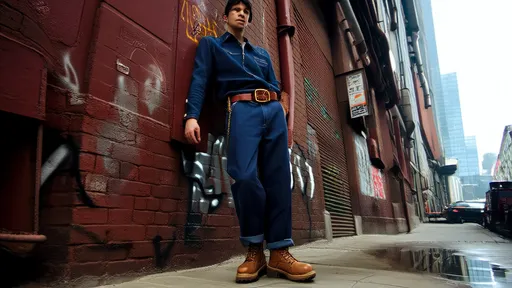
The East End of London has long been a crucible of cultural transformation, where the grit of industrial history collides with the polish of contemporary creativity. In recent years, this dynamic has manifested in a particularly striking way: the elevation of workwear aesthetics into something refined, even luxurious. What was once the uniform of dockworkers and artisans has been reimagined as a symbol of understated sophistication, blending functionality with high fashion in a distinctly East End way.
This sartorial shift mirrors the broader regeneration of the area. Once synonymous with poverty and post-industrial decline, the East End is now a hub of innovation, where tech startups rub shoulders with artisan bakeries and avant-garde galleries. The rise of polished workwear speaks to this new identity—a marriage of the area’s rugged past and its aspirational present. The aesthetic isn’t about erasing history but refining it, turning utilitarian fabrics like canvas and denim into canvases for meticulous tailoring and subtle detailing.
Local designers have been at the forefront of this movement, drawing inspiration from the area’s heritage while pushing boundaries. Think chore jackets with Italian wool linings, or boiler suits cut from Japanese selvage denim. These pieces retain their workwear DNA—the pockets, the durability, the no-nonsense silhouettes—but are executed with a level of craftsmanship that elevates them beyond their humble origins. It’s a rejection of fast fashion, a celebration of longevity and substance over fleeting trends.
The trend has resonated beyond the East End, influencing global fashion while remaining rooted in local identity. International brands have taken note, but there’s an authenticity to the East End’s interpretation that’s hard to replicate. Perhaps it’s the proximity to the Thames, the echoes of the docks, or the lingering spirit of rebellion. Whatever the reason, the result is a style that feels both timeless and utterly of-the-moment—a testament to the area’s ability to reinvent itself without losing sight of where it came from.
Cafés and bars in the area have embraced the aesthetic too, with interiors that blend industrial fixtures with warm, tactile materials. Exposed brickwork and steel beams sit alongside reclaimed wood and leather banquettes, creating spaces that feel lived-in but never shabby. It’s a visual language that complements the clothing: unpretentious, but considered. Even the artisanal coffee served in these spaces feels part of the same ethos—simple, high-quality, and deeply satisfying.
What’s fascinating is how this refinement of workwear has dovetailed with a broader cultural shift towards sustainability. The East End’s new guard values provenance and durability, rejecting disposable culture in favor of pieces that tell a story. It’s not uncommon to see someone in a meticulously repaired vintage jacket, or a pair of boots that have been resoled multiple times. This isn’t just fashion; it’s a philosophy, one that aligns perfectly with the area’s history of making do and making last.
The influence extends beyond clothing and interiors into the very way people move through the city. Cyclists in tailored tweed overcoats, creatives with waxed canvas messenger bags—these are common sights in the East End now. The workwear revival isn’t just about looking good; it’s about living differently, with a focus on practicality and purpose. It’s a rejection of the overly curated, Instagram-ready personas that dominate other parts of the city, in favor of something more grounded and genuine.
Of course, this renaissance hasn’t been without its tensions. As property prices rise and the area becomes increasingly gentrified, there’s a risk of losing the very edge that makes the East End special. The challenge lies in honoring the past while embracing progress, in maintaining the authenticity that gives this workwear revival its soul. For now, though, the balance feels right—a testament to the area’s uncanny ability to absorb change without being diluted by it.
Looking ahead, it’s clear that the East End’s refined workwear aesthetic is more than a passing trend. It’s a reflection of deeper shifts in how we think about clothing, community, and even urban life. In a world that often feels disposable and disconnected, there’s something powerful about a style that values heritage, craftsmanship, and resilience. The East End has always been a place of reinvention, and in this latest chapter, it’s offering a blueprint for how to move forward without leaving the best parts of ourselves behind.

By /Aug 13, 2025

By /Aug 13, 2025

By /Aug 13, 2025

By /Aug 13, 2025
By /Aug 13, 2025

By /Aug 13, 2025

By /Aug 13, 2025

By /Aug 13, 2025

By /Aug 13, 2025

By /Aug 13, 2025

By /Aug 13, 2025

By /Aug 13, 2025
By /Aug 13, 2025
By /Aug 13, 2025

By /Aug 13, 2025
By /Aug 13, 2025

By /Aug 13, 2025
By /Aug 13, 2025
By /Aug 13, 2025
By /Aug 13, 2025
